Hot, dry weather can put serious stress on pine trees across the Richmond area — and stressed trees are often the first target for pine bark beetles.
While bark beetles are a natural part of the environment, outbreaks become more common when trees are weakened by drought, compacted soil, construction stress, or poor root health. Once a pine tree begins to decline, beetles can spread quickly and cause significant damage.
The good news is that proactive tree care and healthy soil conditions can help support stronger, more resilient trees.
At Truetimber Arborists, we help Richmond and Yorktown homeowners identify tree stress early and improve growing conditions through professional plant health care and soil support treatments.
Why Pine Bark Beetles Attack Stressed Trees
Healthy pine trees naturally defend themselves against bark beetles by producing resin, or sap, that helps push invading insects out of the tree.
But during periods of drought or extreme heat, trees often struggle to maintain those defenses.
Several factors can increase stress on pine trees, including:
- Dry soil and lack of rainfall
- Compacted soil around the root zone
- Root damage from construction or heavy traffic
- Poor nutrient availability
- Existing disease or storm damage
When trees become stressed, bark beetles are more likely to infest weakened areas beneath the bark, disrupting the tree’s ability to move water and nutrients.
In Richmond and surrounding communities, summer heat and inconsistent rainfall can create ideal conditions for pine tree stress.
Signs of Pine Bark Beetle Damage
Early detection is important because bark beetle activity can escalate quickly.
Homeowners should watch for:
- Browning or yellowing pine needles
- Thinning canopy growth
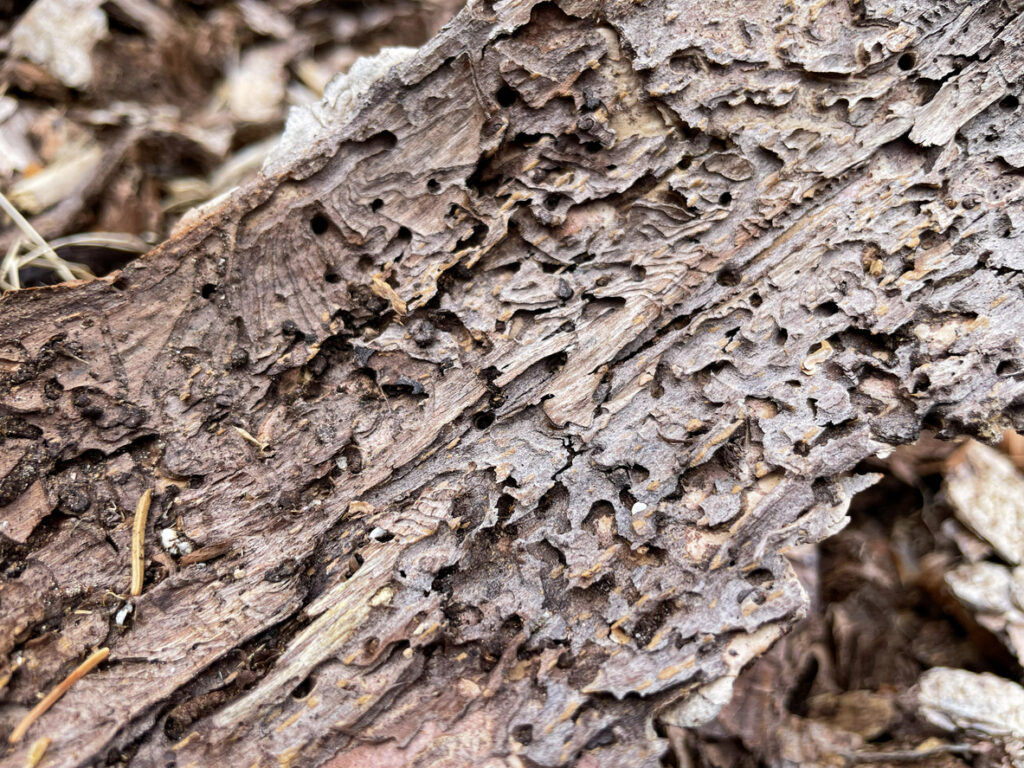
- Small holes in the bark
- Pitch tubes or sap buildup on the trunk
- Sawdust-like material near the base of the tree
- Sections of the tree declining rapidly
In some cases, nearby pine trees may also begin showing signs of stress if beetle activity spreads through an area.
If you notice sudden changes in your pine trees, having them evaluated early may help identify contributing stress factors before decline worsens.
How Soil Health Affects Pine Tree Resilience
Many homeowners focus on what’s happening above ground, but a tree’s health often begins below the surface.
Compacted or dry soil can limit how effectively roots absorb water and nutrients. During hot Richmond summers, stressed root systems may struggle to keep trees hydrated, especially in areas with heavy clay soil, construction activity, or competition from turfgrass.
Healthy soil helps:
- Retain moisture longer
- Improve root function
- Support nutrient uptake
- Reduce environmental stress
- Encourage healthier overall tree vigor
Even mature pine trees can become vulnerable when soil conditions deteriorate over time.
How Bio-Hydration and Soil Care Treatments Help
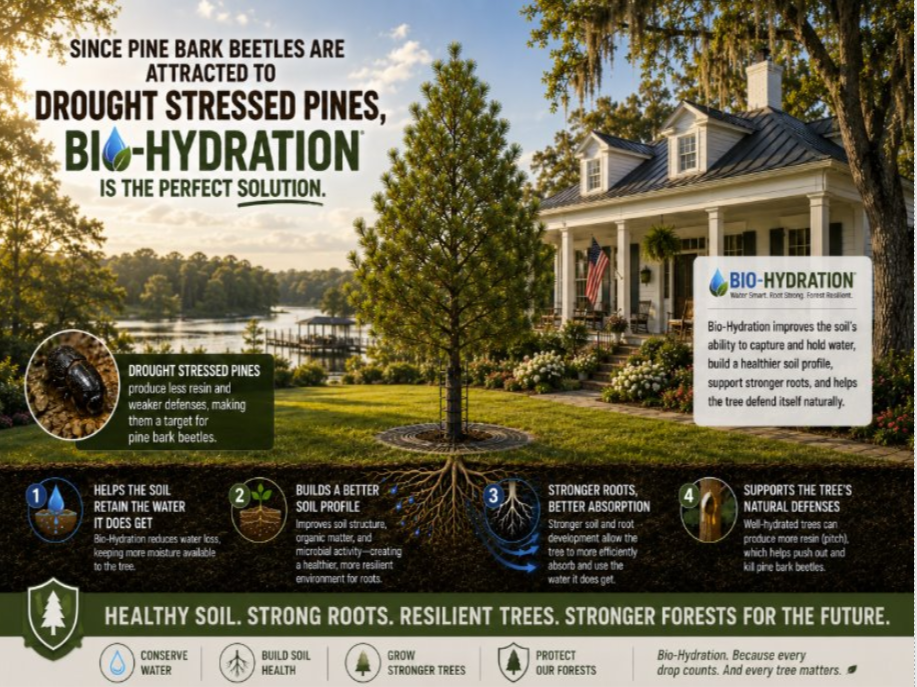
One way arborists help support stressed trees is through bio-hydration and soil health treatments designed to improve moisture retention and root-zone conditions.
These treatments are intended to:
- Support healthier soil structure
- Improve water penetration around roots
- Reduce drought-related stress
- Help trees access moisture more efficiently
- Encourage stronger root development
While no treatment can guarantee protection from bark beetles, reducing environmental stress can help trees better withstand the conditions that often make them vulnerable.
At Truetimber Arborists, our plant health care approach focuses on long-term tree vitality and practical solutions tailored to the specific conditions on your property.
When to Have a Pine Tree Evaluated
If a pine tree is declining quickly, timing matters.
You should consider scheduling an arborist evaluation if:
- Needles are browning rapidly
- Multiple pine trees are showing stress
- Beetle holes or pitch tubes are visible
- Soil around the tree stays extremely dry
- Construction or grading recently occurred nearby
- Limbs are beginning to die back
An inspection can help determine whether the issue is related to drought stress, insects, root problems, or a combination of factors.
Frequently Asked Questions
What attracts bark beetles to pine trees?
Bark beetles are most commonly attracted to stressed or weakened pine trees, especially during drought or extreme heat.
Can a pine tree recover from bark beetles?
Recovery depends on the severity of the infestation and the overall health of the tree. Early intervention offers the best chance of preserving tree health.
Does drought stress increase bark beetle activity?
Yes. Drought stress can weaken a tree’s natural defenses, making it more vulnerable to bark beetle infestation.
How can I help my pine tree retain moisture?
Proper mulching, watering practices, and soil health treatments can help improve moisture retention around the root zone.
When should I call an arborist for a pine tree?
You should contact an arborist if you notice browning needles, thinning canopy growth, bark damage, or rapid decline.
Concerned about stressed pine trees on your property? Call us today at 804-218-8733 or contact us online.
Protect Your Pine Trees Before Stress Gets Worse
Richmond and Yorktown summers can be hard on pine trees, especially during extended periods of heat and low rainfall.
Proactive care, healthy soil conditions, and early stress management can all play an important role in supporting stronger, healthier trees over time.
If you’re concerned about pine tree decline or bark beetle activity on your property, professional evaluation and plant health care support may help identify issues before damage progresses further.