
Weekly Report
September 25, 2024
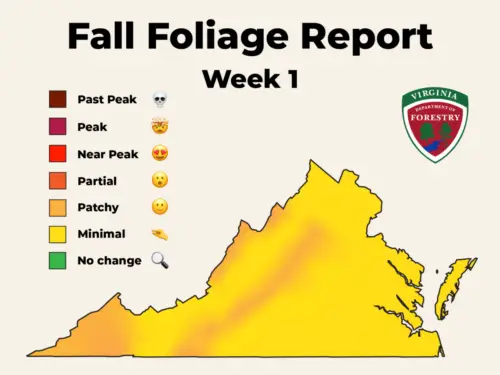
The autumnal equinox has passed, and fall is officially here! In a typical autumn, most of Virginia is still very green in late September. This is NOT a typical year.
This year’s especially dry and hot summer has taken a toll on Virginia’s forests and urban trees alike. This stress will bring fall color early to much of the state. Trees growing in harsh conditions, such as urban areas, high elevation ridgetops, and poor soils, as well as species less adapted to dry conditions, are often the first to hint at fall. Many will go straight to brown or lose their leaves before showing much color.
Signs of stress are already evident statewide in the overall fading of green in our woodlands. Several of the usual “early changers” including tulip-poplar, sycamore, and black walnut ““ are yellowing and dropping leaves.
Perhaps most surprising this early in the season is the amount of red visible across the landscape. As far east as the Piedmont, many dogwoods have turned dusty rose, their first blush toward a deeper shade. Black gum, sumac, poison ivy and Virginia creeper are showing significant bright red along roadsides. The upper branches of red maple are already showing their namesake hues, which usually aren’t present until mid-season.
No matter the cause for change, the net result, for us, is an earlier peek at a colorful fall landscape. Enjoy the show, and don’t forget to give any young trees in your yard plenty of water and mulch as they prepare for winter.

- Bald Mountain overlook, Nelson County

- Early maple, Radford

- Black gum, Charlottesville
Virginia’s many species of deciduous trees create an interesting mix of autumn colors. Here are some colors you can expect from some of our most common species:
| Tree | Color | Timing |
| Black Gum | Bright red | Early |
| Dogwood | Red to maroon | Early |
| Tulip-poplar | Yellow | Early |
| Red Maple | Orange to brilliant scarlet | Middle |
| Sugar Maple | Bright orange | Middle |
| Beech | Yellow to orange | Middle |
| Hickory | Gold | Middle |
| Oaks | Deep red, amber, russet | Late |
Fall Foliage Resources
- Fall Foliage Report ““ (800)424-LOVE (begins mid-late September each year)
- Blue Ridge Parkway ““ (828)298-0398 (press “3”)
- George Washington and Jefferson National Forest
- Explore Fall
- Smoky Mountains Fall Foliage Prediction Map
- All things Fall In Virginia from the Virginia Tourism Corporation
- Find a state forest to view fall color
- Prince William Forest Park is an oasis of natural beauty and human history located just south of Washington, DC.
Fall Foliage Driving Tours
Try our DOF-recommended Fall Foliage Driving Tours.
Why Leaves Change Color
- Chlorophyll gives leaves their familiar green color.
- Carotenoids produce yellow, orange, and brown colors.
- Anthocyanins produce red and purple colors and are the same pigments that give color to fruits like blueberries and cherries.
Both chlorophyll and carotenoids are present in the leaf cells throughout the growing season. During this time, chlorophyll is produced and leaves appear green. As days get shorter, chlorophyll production slows and eventually stops. With the green color no longer visible, the yellow carotenoids are revealed. During autumn, bright light and excess plant sugars produce red anthocyanins within leaf cells.
Peak Fall Foliage in Virginia: 2026 Guide
Peak fall foliage in Virginia typically arrives mid-October in the mountains and late October in the Richmond area. The 2026 season looks promising based on current weather patterns. Healthy trees, adequate rainfall, and cooler autumn nights all contribute to vibrant fall colors across the Commonwealth.
When to See Fall Colors in Virginia (2026 Predictions)
Virginia’s varied landscape creates a long fall foliage season that spans several weeks. Elevation plays the biggest role in timing. Higher elevations see color first, with leaves gradually changing as you move east toward the coast. Weather conditions throughout the year also affect when and how vibrant the colors appear.
Mountain Region
The Blue Ridge Mountains and Shenandoah Valley typically see peak foliage between October 10 and October 20. In 2026, expect color to start appearing in early October at the highest elevations. Shenandoah National Park and the Blue Ridge Parkway offer some of the most spectacular views. Drive Skyline Drive during mid-October for the best experience.
Piedmont and Central Virginia
The Richmond area and surrounding Piedmont region usually peak between October 20 and November 1. The mix of oak, maple, and sweetgum trees creates a diverse color palette. Red maples bring brilliant scarlet. Sugar maples add orange. Oaks provide deep russet and amber tones. Sweetgums contribute striking purple and yellow leaves.
Coastal Virginia
Eastern Virginia and the Hampton Roads area see peak color latest, typically from late October through early November. The milder coastal climate extends the growing season. Expect to see strong color through the first week of November in most years.
Best Places for Fall Foliage in Virginia
Virginia offers countless spots to enjoy autumn colors. From national parks to local scenic drives, there’s something for every fall foliage enthusiast.
- Shenandoah National Park: 105 miles of Skyline Drive with mountain overlooks
- Blue Ridge Parkway: Connects Shenandoah to North Carolina with stunning views
- Pocahontas State Park: Just 20 miles from Richmond with easy hiking trails
- James River Park System: Urban trails along the river in downtown Richmond
- George Washington and Jefferson National Forest: Western Virginia wilderness
- Prince William Forest Park: An oasis of color just south of Washington, DC
- Virginia State Arboretum: Blandy Experimental Farm in Clarke County
Fall Colors in the Richmond Area
Richmond’s tree canopy creates beautiful fall displays throughout the metro area. The city’s parks and residential neighborhoods showcase a variety of native species. Monument Avenue and the Fan District feature mature maples and oaks lining historic streets. Bryan Park and Byrd Park offer easy walking paths through colorful woods.
Common Richmond trees and their fall colors include red maples showing brilliant scarlet, white oaks displaying russet and amber, sweetgums producing purple, yellow, and orange, and hickories turning bright gold. Black gum trees are often the first to change, showing deep red as early as late September.
The James River corridor provides particularly scenic views. The trees along the river benefit from consistent moisture, which helps produce more vibrant colors. Walking trails from Pony Pasture to Belle Isle offer easy access to fall foliage without leaving the city.
Why Healthy Trees Have Better Fall Color
The science behind fall color comes down to tree health. Healthy trees produce more intense reds, oranges, and yellows. Stressed trees often turn brown and drop leaves early without much color.
Throughout the growing season, chlorophyll gives leaves their green color. As days shorten in fall, chlorophyll production stops. Yellow and orange pigments called carotenoids become visible. Red and purple colors come from anthocyanins, which trees produce during autumn using stored sugars.
Trees need adequate water and nutrients to store enough sugar for vibrant anthocyanin production. Trees suffering from drought, pest damage, or disease often lack the energy reserves for strong fall color. This is why tree care management throughout the year leads to more beautiful fall displays.
Plant health care programs address nutrient deficiencies, pest problems, and disease issues before they affect your trees. Proper watering during dry summers also helps trees prepare for their autumn show.
Prepare Your Trees for Winter
Fall is an excellent time to assess your trees and prepare them for winter. After leaves drop, tree structure becomes visible. This makes it easier to spot dead branches, weak growth patterns, and potential problems.
Tree pruning during late fall or winter causes less stress to trees. Removing dead or damaged branches before winter storms reduces the risk of breakage. Proper pruning also improves tree structure and encourages healthy spring growth.
Before winter arrives, consider having an arborist evaluate your trees. Look for signs of decline, pest damage, or structural issues. Addressing problems now helps ensure your trees stay healthy through winter and come back strong in spring.If you have questions about your trees or notice concerning changes in fall color, the ISA Certified Arborists at TrueTimber can help. Contact our tree service team in Richmond, VA to schedule a consultation.