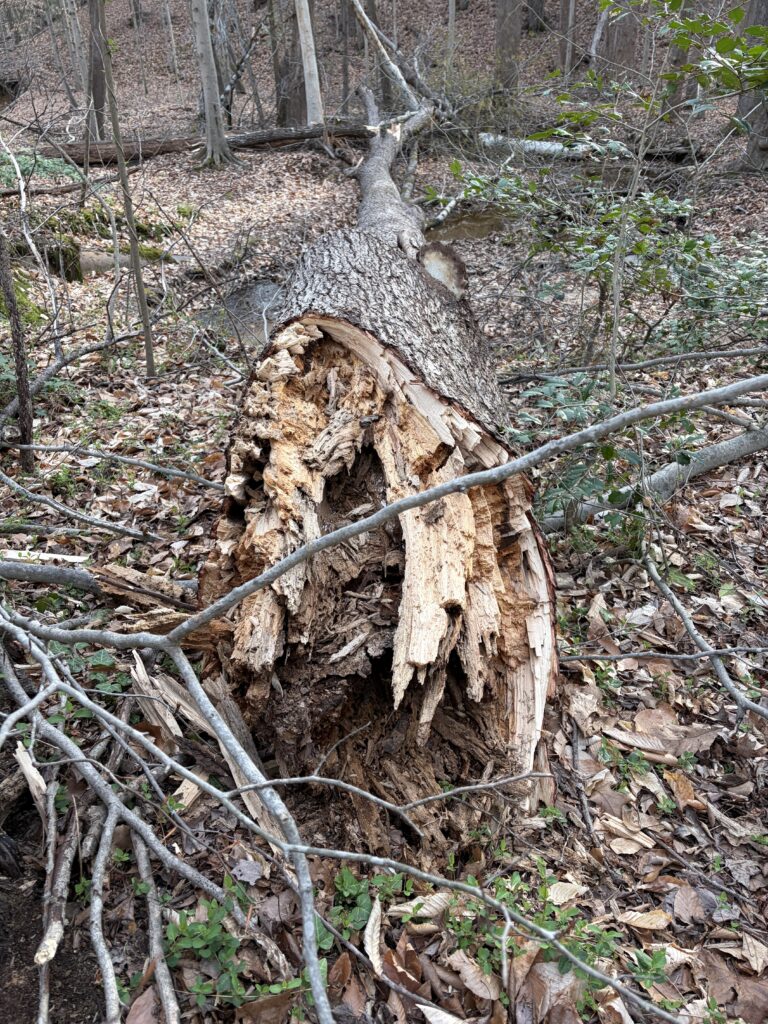
Recently, I’ve been observing the trees awakening with the spring season—and with that, the strong winds that have caused some damage. When I encounter a fallen tree or broken limb, whether in the woods or a yard, I instinctively try to understand why it failed, but also who or what has lost a home.
This article highlights some of the essential ecological values of decay, dead limbs, and hollows (or cavities).
Why Dead Wood Still Matters
Decay, dead tree parts, and even entire dead trees play a crucial role in supporting a wide range of wildlife and insects.
Benefits of Dead Trees and Limbs (When Appropriate)
- Homes and nurseries for countless insects, birds, and mammals
- Roosting and visibility for birds of prey
- Habitat for fungi (mushrooms), which provide food and shelter for other species
- Ground cover for small mammals, insects, amphibians, and reptiles
- Stream cover for fish, and access for animals like raccoons or bears
- Erosion control and a source of organic matter as they break down into soil
What a Hollow Tree Really Means
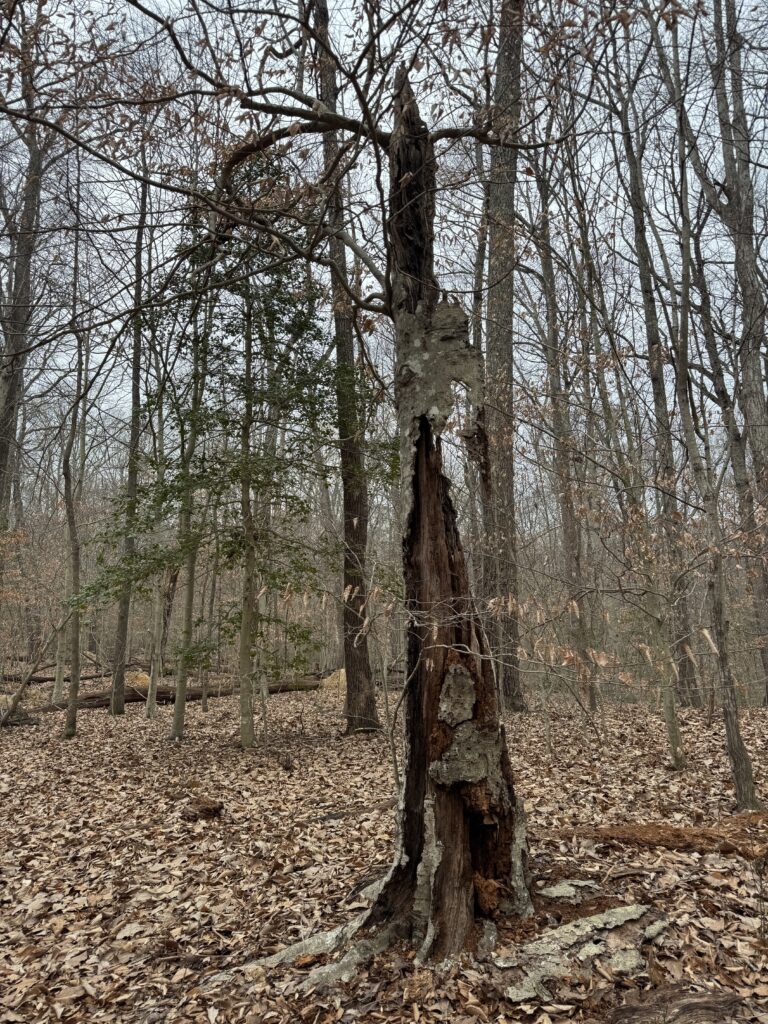
A hollow in a tree does not automatically mean the tree is unhealthy or destined to fall.
Trees seal (they do not heal) their wounds, incorporating the hollow into their structure over time. However, if the remaining sound wood in the trunk is insufficient to support the tree, there is a risk of collapse.
How Hollows Form
Tree cavities can develop for several reasons:
- Heartwood Decay: The natural breakdown of the non-living wood at the tree’s center
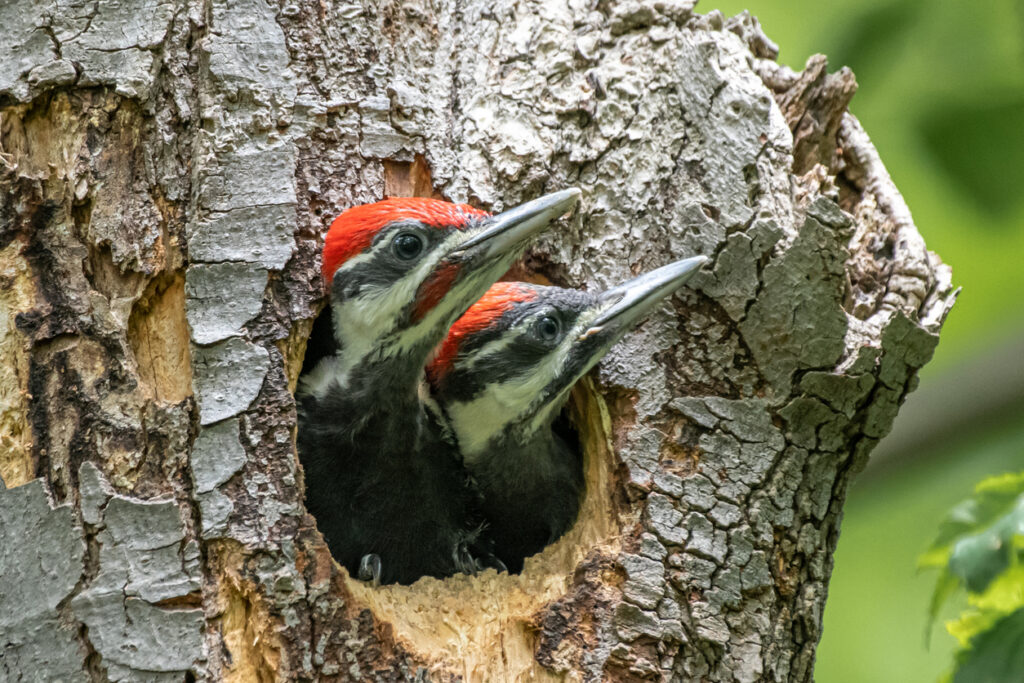
- Injury: Damage from storms, lightning, vehicles, or even openings created by woodpeckers
- Environmental Factors: Stress from sunscald, winter injury, or water scarcity
How to Assess Tree Risk
When you notice a defect in a tree, it’s important to think beyond just the damage. Consider these questions:
- What is the specific concern or visible damage?
- What is the target? (What could be impacted if the tree or limb fails?)
- What is the size of the damaged or dead portion?
- How often is the area used or occupied?
Balancing Ecology and Safety
While there is real ecological value in dead and decaying wood, not all dead trees or limbs should remain. In some cases, they can pose an unacceptable risk to people or property.
Consulting a certified, risk-assessment-qualified arborist can help you determine whether a tree can be safely retained or should be removed.
Pro Tip
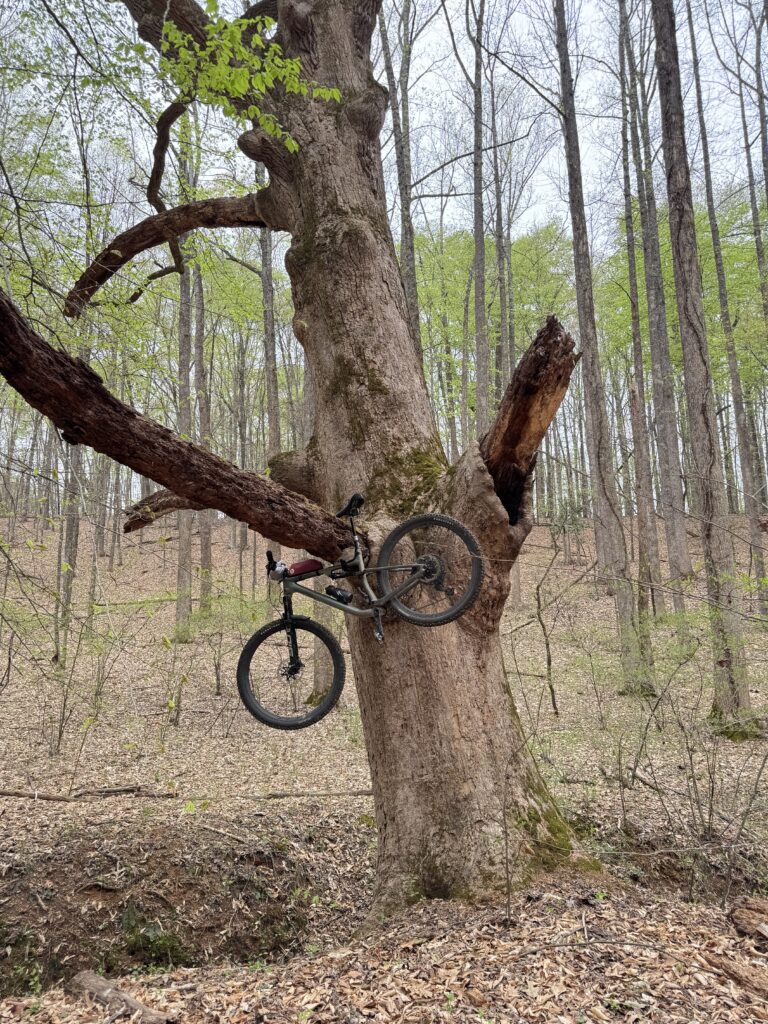
In natural areas or low-traffic parts of your property, retaining some dead wood can support biodiversity. In high-use areas, safety should always come first.
Work With a Local Arborist You Trust
At Truetimber Arborists, we believe healthy relationships—with customers, crews, and the natural world—create the best outcomes. Our Richmond-based team brings safe, professional tree care that protects your property and preserves your trees.
Ready for a free, no-pressure estimate? Call us today at 804-218-8733 or schedule at https://truetimber.net/