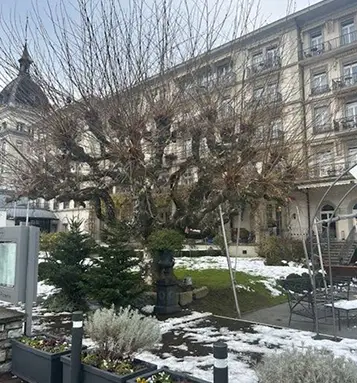
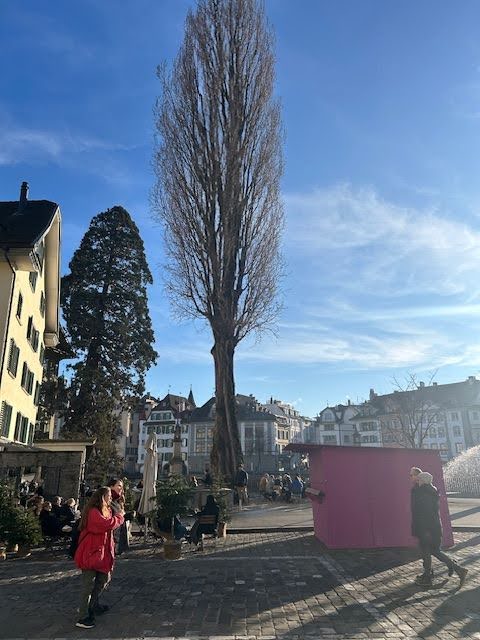
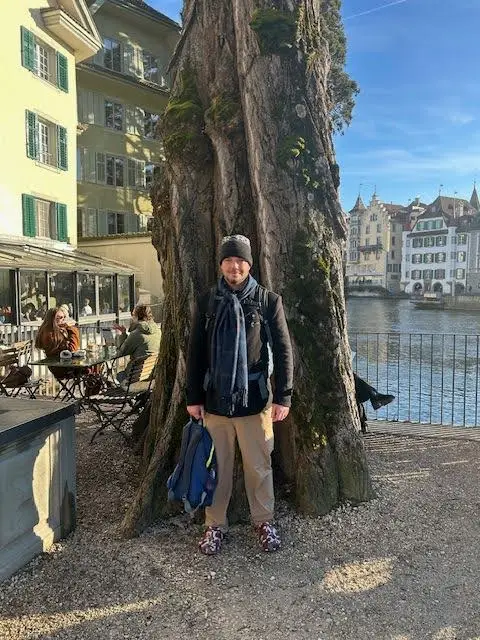
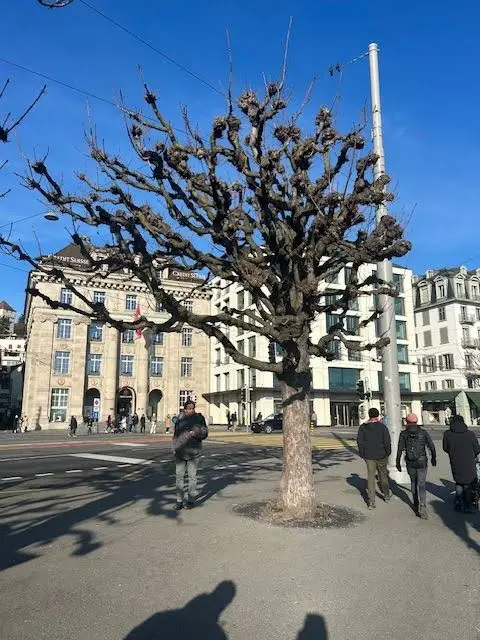
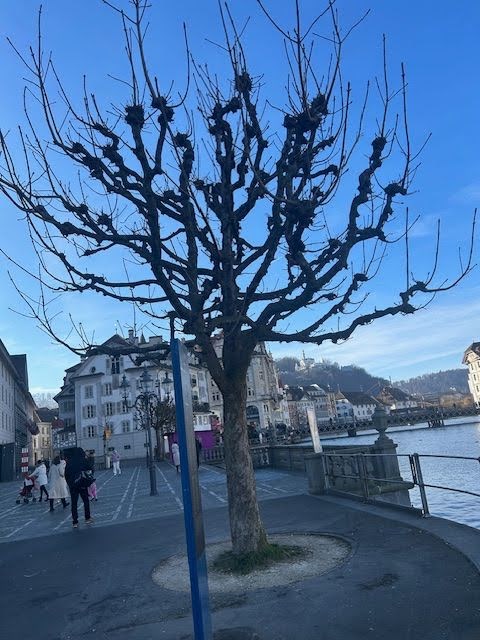
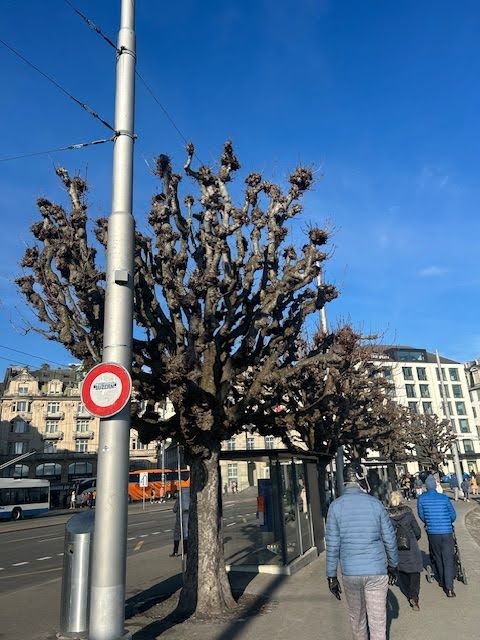
Laura (my wife) and I just got back from our honeymoon, a whirlwind trip through Italy and Switzerland. While she was capturing photos of landmarks, I was getting sidetracked by the trees. At one point in Lucerne, Switzerland, she looked over at me, staring up at a row of trees along the waterfront. “What’s up with these trees and their paddles?” she asked. And just like that, our romantic getaway turned into a discussion on pollarding, pruning methods and why European trees look different from the ones back home in Richmond.
Pollarding vs. Topping
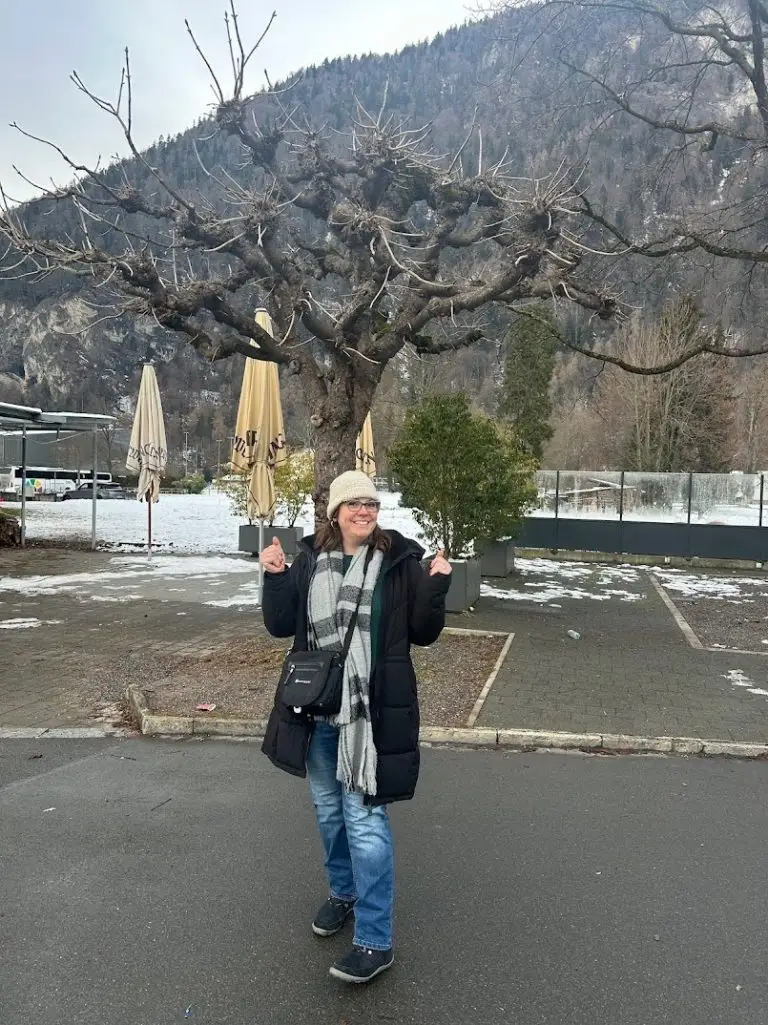
One of the biggest things I noticed (especially in Lucerne), was how common pollarding was. It’s an old-world pruning technique where trees are cut back to the same points year after year, creating thick, knobby growth points. Done right, it keeps trees compact and manageable in urban spaces while encouraging fresh growth.
That’s very different from topping, which is unfortunately far more common back in the U.S.. Topping is when someone chops off the top of a tree, usually to control height without any regard for structure or long-term health. It’s one of the worst things you can do, it weakens the tree, invites disease, and leads to weak, fast-growing limbs that are more likely to fail down the road.
As a certified arborist, I’ve actually signed an agreement with the International Society of Arboriculture stating I will not top trees. So seeing cities where pollarding was not only common but done correctly was fascinating. Pollarding is a technique that takes commitment, you can’t just do it once and walk away, but when it’s maintained properly, it creates strong, structured trees instead of butchered ones.
Trees as Part of the Scenery
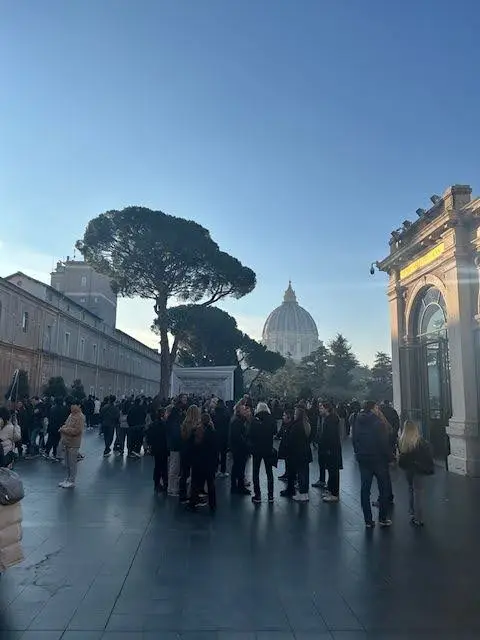
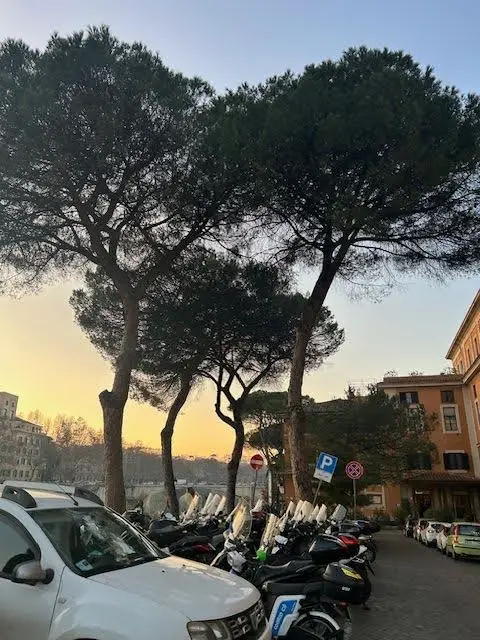
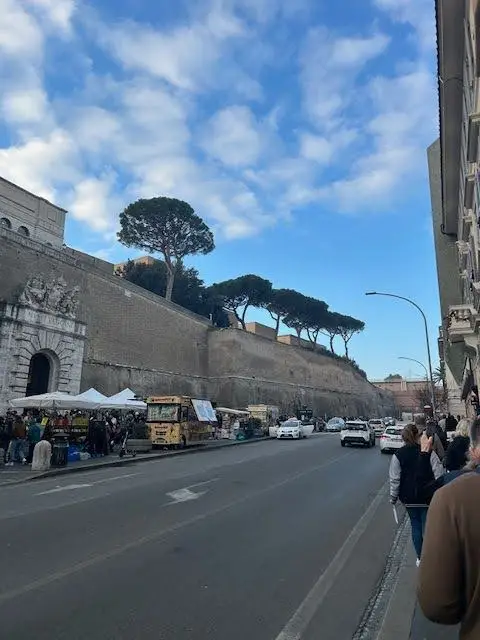
Another interesting pruning method I noticed was how trees weren’t just shaped for maintenance but also to complement the landscape. In Italy, the pruned trees seemed intentionally shaped to frame monuments, allowing clear sight-lines to historic architecture and monuments rather than blocking them. It felt like the trees were just as much a part of each city’s aesthetic as the architecture itself. It made me wonder why we don’t take this approach more often back home. Too often in the U.S., trees are treated as obstacles to be cut back for clearance or removed when they get in the way. But in these European cities, trees were woven into the urban design rather than being an afterthought.
I don’t think Laura expected a full-on arboriculture discussion during our honeymoon, but that’s what happens when you travel with a tree guy. She got her photos of monuments, and I got my photos of pollarded and other interesting trees, it was a win-win.
I was grateful to witness the styles of pruning on our trip to Europe and ponder what would be deemed acceptable back home. Pollarding in some instances could be called “crape murder” among our landscapes. This is an ongoing discussion between right and wrong. It may or may not be the right method, but with the mindset behind it, long-term, thoughtful pruning instead of reactionary cuts, could go a long way in shaping healthier urban forests.
One thing’s for sure ““ wherever we travel next, I’ll be looking up!
Understanding Pollarding: An Ancient Tree Pruning Technique
Pollarding is an ancient tree pruning method where upper branches are removed to create a dense head of foliage and controlled growth. This technique, practiced across Europe for centuries, offers a sustainable way to manage tree size while maintaining tree health when performed correctly by trained arborists.
What Is Pollarding?
Pollarding involves cutting a tree’s branches back to the main trunk or primary limbs at regular intervals. The cuts are made at specific points called pollard heads or knobs. Over time, these points develop thick, callused growth areas where new shoots emerge each season.
The technique originated in medieval Europe as a way to harvest wood for fuel, fodder, and building materials without killing the tree. Farmers would cut branches at a height that prevented livestock from grazing on new growth. Today, cities across Europe still use pollarding to manage street trees in tight urban spaces.
When maintained properly, pollarded trees develop a distinctive appearance with knobby branch ends and compact canopies. The trees can live for centuries under this management system, often outliving unpollarded trees of the same species.
Pollarding vs. Topping: Understanding the Difference
Many homeowners confuse pollarding with topping, but these two practices produce very different results. Understanding the distinction matters for your trees’ long-term health. Tree pruning done incorrectly can cause lasting damage, while proper techniques promote strong, sustainable growth.
Why Topping Harms Trees
Topping involves cutting large branches or the main trunk with no regard for the tree’s structure or natural growth patterns. The cuts are made randomly, leaving large wounds that struggle to heal. Topped trees respond by producing dozens of weakly attached shoots that grow rapidly but lack structural strength.
These weak limbs become hazardous as they mature. They’re more likely to break during storms, creating the exact safety problem the topping was meant to prevent. Topped trees also become more susceptible to disease and decay as the large wounds provide entry points for pathogens.
Why Pollarding Works
Pollarding succeeds because it works with the tree’s biology rather than against it. Cuts are made at established points where the tree has developed strong callus tissue. New growth emerges from these reinforced areas, creating branches with solid attachment points.
The key difference lies in timing and commitment. Pollarding must begin when trees are young, typically between five and ten years old. Once started, the process must continue every one to three years. This regular maintenance prevents branches from growing too large and keeps the pollard heads healthy.
Which Trees Can Be Pollarded?
Not every tree species responds well to pollarding. Trees that tolerate this technique share certain traits: they heal quickly, produce vigorous new growth, and can handle repeated cutting without decline. The following species have long histories of successful pollarding:
• London Plane trees (common on European streets)
• Willows (particularly effective, heal rapidly)
• Lindens and Limes (traditional European pollards)
• Mulberries (historically pollarded for silk production)
• Black Locust (responds well in urban settings)
• Oaks (certain species only)
• Sweetgum (can be managed through pollarding)
Some trees should never be pollarded. Conifers, most evergreens, and thin-barked species lack the regenerative capacity to recover from repeated cutting. Attempting to pollard unsuitable species often results in slow decline and eventual tree death.
When to Start Pollarding
Timing is critical for successful pollarding. The process must begin when trees are young, before branches exceed two to four inches in diameter. Starting too late leaves wounds that cannot heal properly, inviting disease and structural weakness.
The ideal age to begin varies by species, but most trees should be pollarded for the first time between five and ten years after planting. At this stage, the tree has established a strong root system and trunk but hasn’t developed branches too thick for clean cuts.
Once established, pollarding requires maintenance every one to three years depending on species and growing conditions. Allowing too much time between cuts creates branches that are too heavy for the pollard heads, potentially causing them to split under the weight.
Skipping cycles creates a dangerous situation. A pollarded tree left unattended for five or more years develops long, heavy branches on weak attachment points. These limbs become more hazardous than growth on an unpollarded tree because the attachment sites were never designed to support full-sized limbs.
Why Hire an Arborist for Pollarding
Pollarding requires specialized knowledge that goes beyond basic tree trimming. ISA Certified Arborists understand the timing, techniques, and species requirements that determine success or failure. Working with a professional tree care provider ensures your trees receive proper attention at every stage.
At TrueTimber, our arborists have signed agreements with the International Society of Arboriculture pledging not to top trees. We understand the distinction between harmful topping and proper pruning techniques like pollarding. Our Truetimber Academy graduates receive comprehensive training in sustainable tree management practices.
Professional arborists also recognize when pollarding isn’t appropriate. Sometimes property owners request pollarding when other tree care solutions would better serve their goals. An experienced arborist can recommend alternatives like crown reduction or selective pruning when those methods make more sense for your specific situation.
Frequently Asked Questions
Is pollarding bad for trees?
Pollarding is not harmful when performed correctly on suitable species. The technique has sustained trees for hundreds of years across Europe. However, improper pollarding, starting on mature trees, using the wrong species, or irregular maintenance, can severely damage or kill trees. Success depends on expertise and commitment.
How often do pollarded trees need to be pruned?
Pollarded trees require pruning every one to three years, depending on species and growth rate. Willows may need annual attention, while slower-growing trees can wait up to three years. Consistency matters more than exact timing. Never allow pollarded branches to grow for more than five years between cuts.
Can you start pollarding a mature tree?
Starting pollarding on a mature tree is generally not recommended. Large branches leave wounds that cannot heal properly, inviting decay and disease. Some species with exceptional healing ability may tolerate late pollarding, but the results are rarely good. For mature trees, consider alternative pruning methods instead.
What happens if you stop pollarding a tree?
Abandoning a pollarded tree creates hazardous conditions. The branches continue growing from weak attachment points that were designed for regular cutting. These heavy limbs become increasingly likely to fail, especially during storms. If you inherit a pollarded tree, maintaining the cycle is safer than stopping.
Is pollarding the same as coppicing?
Pollarding and coppicing are related but distinct techniques. Coppicing cuts trees at ground level, while pollarding cuts at six feet or higher. Both stimulate vigorous regrowth from established points. Coppicing works well in woodland management, while pollarding better suits urban areas where clearance beneath the canopy matters.
Professional Tree Pruning in Richmond
Whether you’re considering pollarding or need guidance on the best pruning approach for your property, TrueTimber’s certified arborists can help. We assess each tree individually and recommend techniques that support long-term health and structural integrity.
Contact us to schedule a consultation. Our team serves Richmond and surrounding areas with tree care services backed by decades of experience and ISA certification. We believe in thoughtful, sustainable tree management that keeps your landscape healthy for generations.