
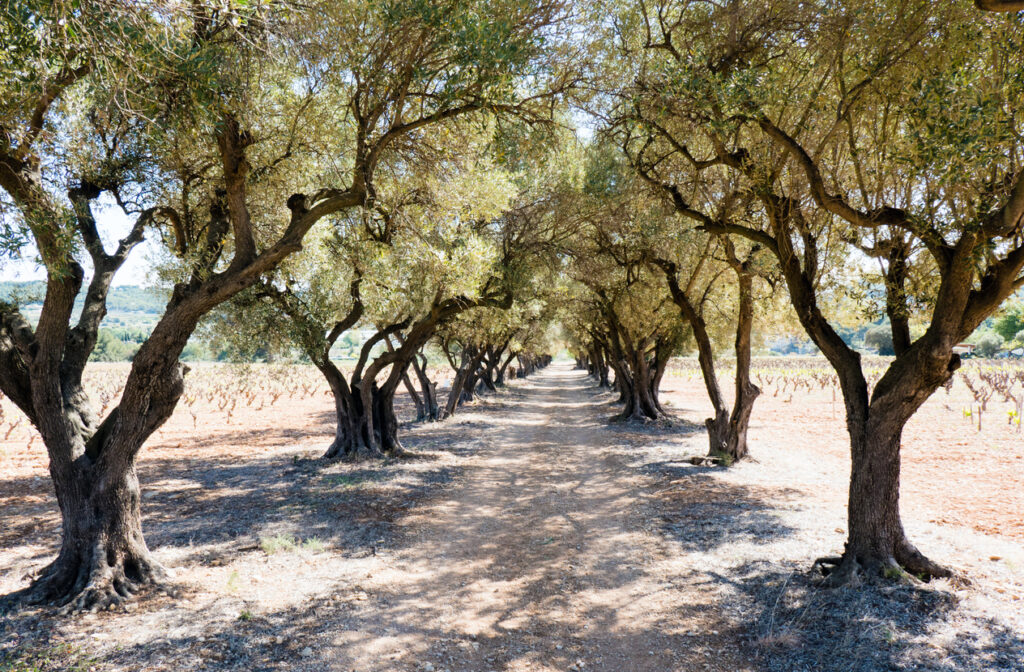
When you think of the Roman Empire, you probably picture gladiators, emperors with questionable haircuts, and the Colosseum. But there’s another side to Roman ingenuity that rarely gets mentioned: trees along the roadways. Yes, those straight, sun-baked roads that conquered half the known world sometimes had leafy companions.
Roman roads themselves were legendary. Take the Via Appia, for example, built in 312 BCE by Appius Claudius Caecus. It connected Rome to Capua, and later extended all the way to Brindisi. Travelers on this road could have faced long stretches of blazing sun, dust in their eyes, and carts that groaned ominously under their loads. Trees along the roadside offered relief, shade, and a little guidance, almost like natural traffic signs. And if that wasn’t enough, some roads, like the Via Flaminia, completed in 220 BCE, were lined with trees that hinted at approaching towns or estates.
The Romans loved a tree that could pull double duty. Olive, fig, and mulberry trees weren’t just decorative, they were roadside snacks. We know from first-century BCE writers like Columella, wrote that Roman villa owners and road planners valued trees for both practical shade and edible fruit. You could reach up, grab a fig, and continue your journey without stopping at a tavern, a little urban forestry for the hungry traveler.
Not all tree planting was centrally mandated. Wealthy landowners often lined the roads near their estates with trees, partly for shade, partly for prestige. There’s nothing like a perfectly straight row of elms or plane trees to say, “Look at me, plebeians. I have taste… and land.”
By the second century CE, under Emperor Trajan around 117 CE, Rome’s road network had expanded to over 400,000 kilometers. Imagine all those dusty travelers, trudging along the Via Aurelia or the Via Cassia, suddenly grateful for a well-placed plane tree. The Romans understood that streets weren’t just for moving from point A to point B, they were part of the urban experience. Trees reduced heat, calmed traffic, provided shade, and made journeys more pleasant, proving that urban forestry isn’t just a modern invention.
Next time you stroll down a tree-lined avenue, tip your hat to those long-dead road warriors who knew how to make infrastructure and greenery coexist in style. The Romans may not have had air conditioning, but they understood shade—and that, really, is the best urban planning advice you can get.