When most people think about tree care, spring and summer usually come to mind. But in Richmond, winter is one of the most valuable times to assess tree health and safety. With leaves off the canopy and growth temporarily paused, many problems become easier to spot—and easier to address—before spring growth puts new stress on your trees.
A winter tree inspection can help you catch issues early, prioritize pruning, and plan ahead for plant health care before pests, diseases, and heavy foliage return.
Why Winter Is a Great Time to Inspect Trees
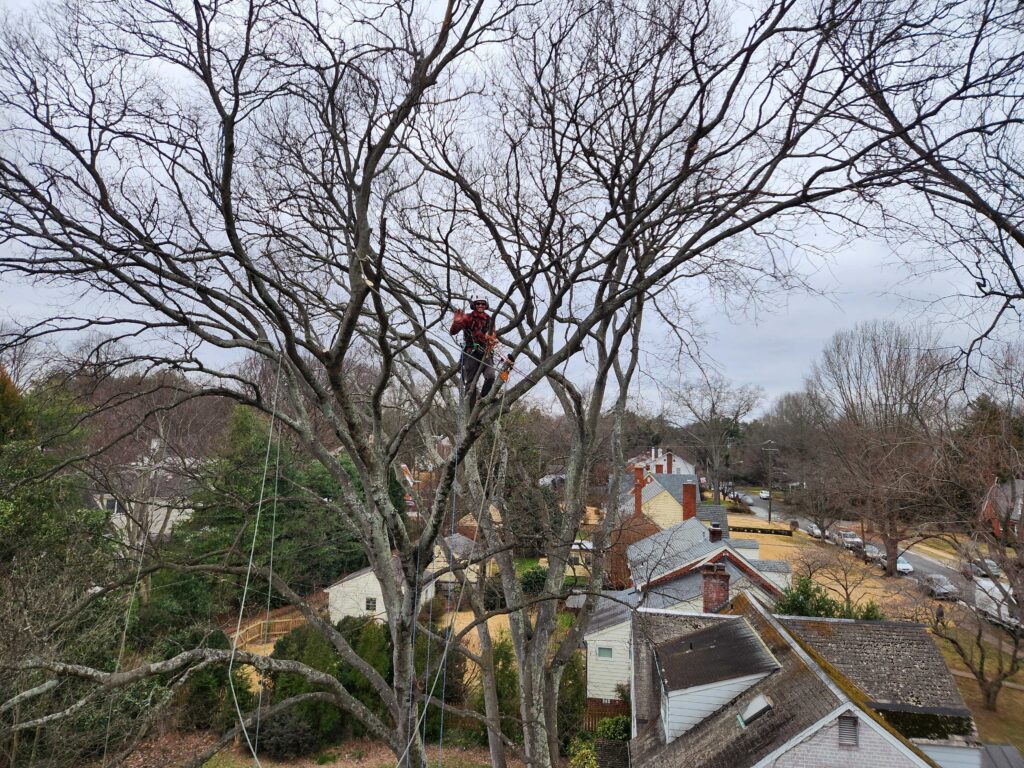
Winter offers a clear view of your trees’ structure. Without leaves blocking visibility, we can more accurately evaluate form, defects, and overall stability.
In the Richmond area, winter inspections are especially useful because:
- Leaf-off conditions reveal structural problems that are hidden in summer
- Freeze–thaw cycles can worsen existing cracks and weaknesses
- Saturated soils and winter storms often expose root and stability issues
- Early planning helps avoid spring scheduling backlogs
Addressing concerns now often prevents emergency situations later.
What We Check During a Winter Tree Inspection
Structural Issues and Branch Attachments
Winter makes it easier to see how a tree is built. Our arborists look closely at:
- Cracks or splits in major limbs or trunks
- Weak branch unions and co-dominant stems
- Poor structure caused by past storm damage or improper pruning
Structural defects don’t usually fix themselves. Once spring growth and leaf weight return, these weaknesses can lead to branch failure.
Dead or Declining Wood
Deadwood is much more visible in winter. Without leaves, dying branches often stand out clearly against the canopy.
Signs include:
- Brittle branches that no longer flex
- Dieback at branch tips
- Hanging or partially failed limbs
Removing deadwood during winter helps reduce the risk of falling branches during spring storms.
Trunk and Bark Problems
Winter inspections often reveal damage that developed slowly over time.
Common issues include:
- Frost cracks caused by rapid temperature changes
- Old wounds that never properly sealed
- Cavities or areas of internal decay
- Fungal growth indicating rot beneath the bark
These problems can compromise a tree’s strength, even if it appears healthy during the growing season.
Root Zone and Soil Conditions
Healthy trees start below ground. Winter is a good time to evaluate root and soil conditions, especially after periods of rain.
Our arborists look for:
- Compacted soil from foot traffic, vehicles, or equipment
- Exposed or girdling roots
- Poor drainage or standing water near the base of the tree
Root issues often go unnoticed until canopy decline appears—by then, stress may already be advanced.
Problems That Get Worse If You Wait Until Spring
Delaying an inspection until trees leaf out can limit options and increase risk. Issues that commonly worsen in spring include:
- Weak limbs failing under new leaf weight
- Insects and diseases spreading rapidly
- Missed opportunities for proper pruning windows
- Higher likelihood of emergency removals instead of proactive care
Winter inspections allow for calm, planned decisions rather than reactive ones.
When to Call a Certified Arborist
You should consider a professional inspection if:
- Trees are close to your home, driveway, or sidewalks
- You have large or mature trees
- Your property experienced ice, snow, or wind damage
- You’re planning spring pruning, fertilization, or planting
A trained arborist can often identify subtle warning signs that are easy to miss from the ground.
What a Professional Winter Inspection Includes
A winter tree inspection with Truetimber Arborists typically includes:
- A visual assessment of tree health and structure
- Identification of safety concerns and risk priorities
- Pruning recommendations for winter or early spring
- Plant health care planning for the upcoming growing season
Our primary goal in a winter inspection is to help you maximize the beauty and enjoyment of the trees on your property while minimizing tree risks.
A Smart Start to the Growing Season
In Richmond, winter doesn’t mean trees are inactive—it’s a critical planning window. Catching problems early can extend the life of your trees, reduce unexpected costs, and give you peace of mind before spring growth begins.
Ready for your free property inspection? Call us today at 804-218-8733 or contact us online.
At Truetimber Arborists, we believe healthy relationships—with customers, crews, and the natural world—create the best outcomes. Our Richmond team brings safe, professional tree care that minimizes risks, maximizes enjoyment, and preserves your trees.